The next morning when I woke up, I realized that we had only 18 days left together. At this point we didn’t know what our plans were. At the start of our trip, I bought a ticket to take me back to Oregon, and Mike bought one to take him back to England. I was waiting for Mike to give me some indication of what he wanted–at this point we had been dating for 2-1/2 years!–but was feeling impatient. I wanted to know what was going to happen next, and I figured I’d have to force the issue soon (propose, perhaps) if he didn’t say something! A lovely breakfast in the hotel dining room made me feel better. We visited the at-the-time faded-glory
to make reservations at the Lake Palace Hotel in Udaipur for later in our trip. We popped in the bookshop, but we didn’t stay long because the clerk was pestering Mike with “helpful information,” which is the quickest way possible to get us to leave a shop. We had lassis on the terrace and read our books. We swam in the hotel pool and had a hot shower–the first one I’d had in India–and had dinner at
, which was nice although a bit expensive.
Next up was the
Amber Fort, to which we trekked uphill by foot. The fort gave us beautiful views of the lake and valley below. The guide took us through the fort, which was fascinating. The fort had lovely mirrored halls with intricately adorned walls and ceilings.
 |
| Amber Fort |
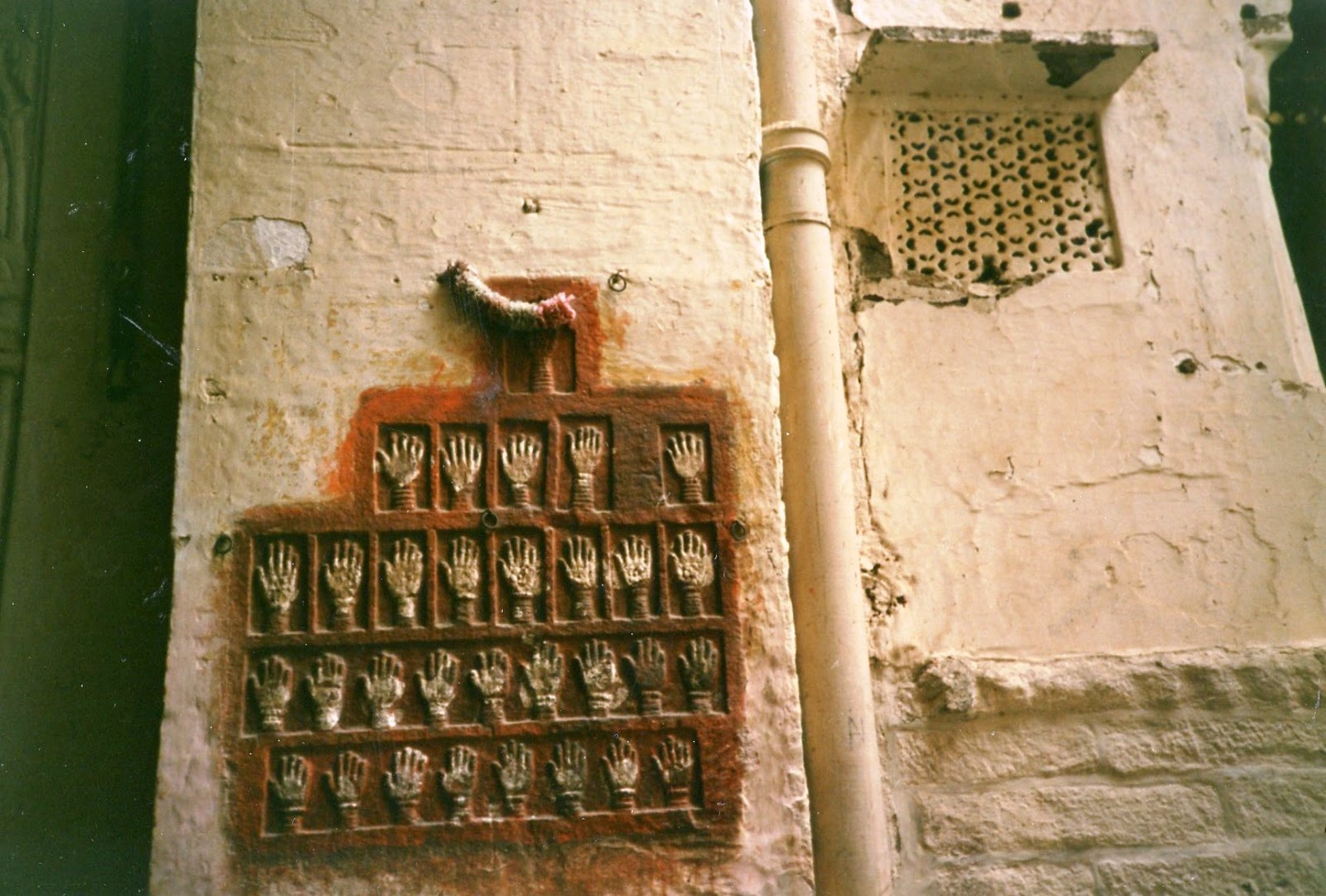
We were taken to the 12 apartments of the maharani, which were separate but joined in a central compound. The walls were whitewashed but under restoration to unearth the lovely Hindu paintings underneath, which the Moguls had ordered to be painted over. Our guide informed us, with a twinkle in his eye, that the 12 maharani never got jealous of each other because the polyamorous maharajah had 12 different passageways into the apartments, so none of them would know where he was that night. The red handprints of the maharani who had committed
sati by throwing themselves on their husband’s funeral pyre really got to me.
 |
| Handprints of maharani who committed sati |
The tour ended with a visit to Rajasthan Cottage Industries, supposedly to see how carpets were made. We didn’t have much money, so although others on the tour bought carpets, we did not. That didn’t stop the salesman from repeatedly saying to us, “Have you decided yet?”
I had tummy troubles in Jaipur and had a difficult time sleeping. Even though we liked the hotel, we found it to be noisy at night. The next day we left for Udaipur, which will always hold a special place in my memory!
Jodhpur, India (September 1989)
We arrived in Jodhpur, the second largest city in Rajasthan, after an overnight (15-hour) train journey from Udaipur. Indian trains stop frequently, and one stop seemed to last for three hours. During one stop, hordes of children banged on the windows and doors of the train compartment–we felt like animals in a zoo. Outside Jodhpur is a desert landscape with green brush. The word jodhpurs owes its etymology to this city.
 |
| Jodhpur |
We stayed in the Sardar Guest House, run by a well-educated, middle-aged elegant Indian woman. They didn’t appear to have many guests. It was a wonderful, charming old place, and our room included a huge dressing room and bathroom. The room charge included continental breakfast, but when asked, we said that yes, we’d like lunch and dinner as well. We continued our tradition on our first day in a city of being lazy to recover from our journey. That evening we had dinner with the owner, a delicious Rajasthani meal. We found her to be well informed and talkative, if a little bit strange. It was our first enounter with an upper-class Indian.
The next day we walked quite a ways to get a rickshaw, but we had to wait for the driver to finish peeing by the side of the road before he would take us. Before coming to Asia, I never dreamed I’d see so many men peeing in public…from Japan to China to India. We rode to the fort through narrow, crowded streets of the old city, which were crammed with honking rickshaws, bicycles, cows, goats, donkeys, and people. Our driver skillfully maneuvered his way through the colorful traffic, at one point nudging aside a poor donkey carrying a sack of dirt. We arrived at the Mehrangarh Fort entrance in one piece and began the long ascent up the hill. The fort, founded in 1458, is the largest in Rajasthan. The city grew around it over the years.
 |
| The other option to get up and down the hill–by elephant |
 |
| Trudging up the hill |
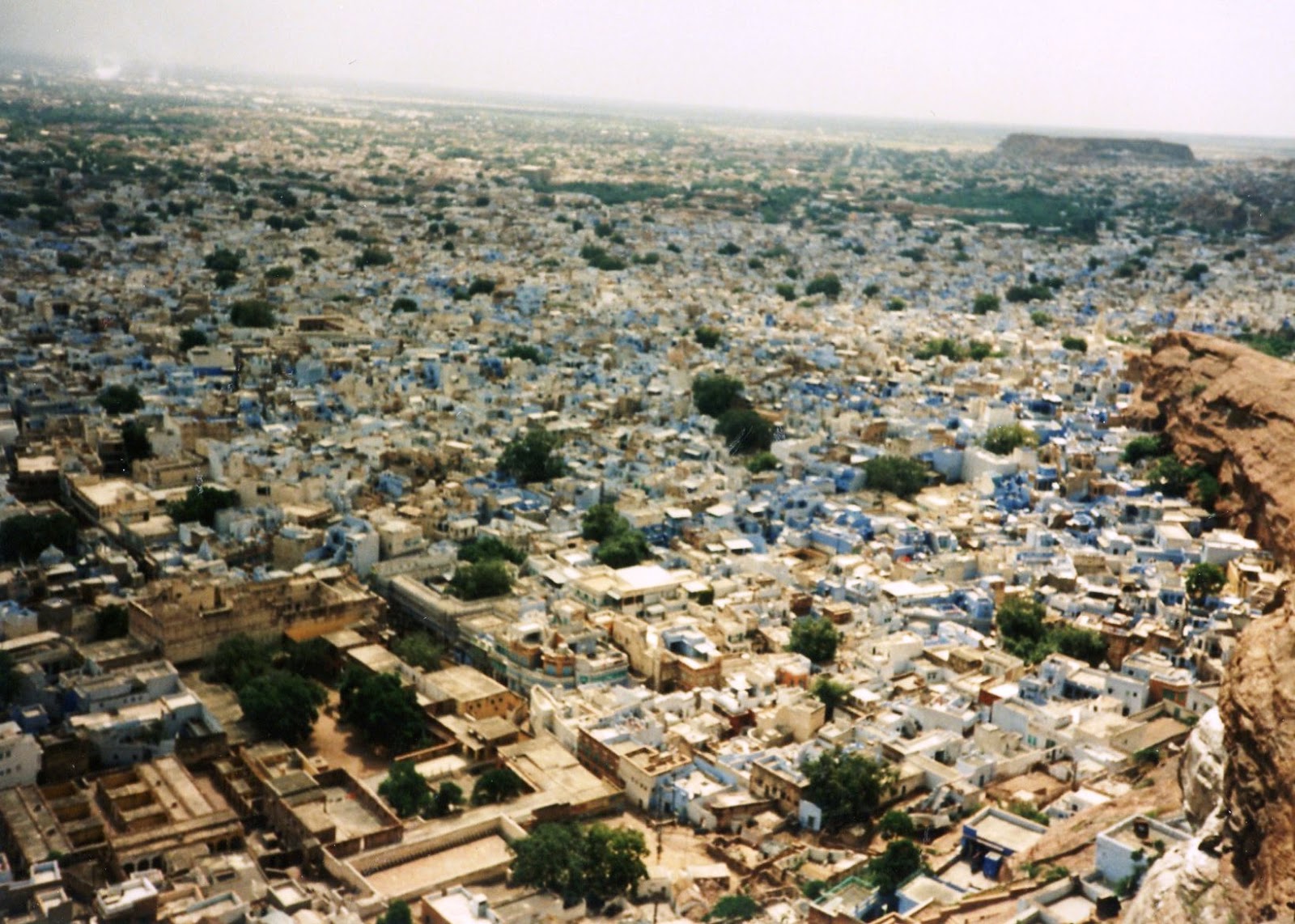
The sun was high in the sky by then and we quickly grew hot and sweaty. The fort entrance fees were 10 rupee a person with 15 rupee for a camera, but it included a guide, who took us around the many exhibits and regal rooms of the maharajah. The bedroom was particularly impressive, and we were told that the maharajah had 60 wives. The guide asked Mike how many wives he had! I most enjoyed the displays of ancient baby cradles, Rajasthani folk music instruments, and silver and bronze thrones on which they rode elephants. The fort gave incredible views of the city down below, hundreds of pale blue houses. Blue signifies that it’s a Brahmin house…and it’s why Jodhpur is nicknamed “the blue city.”
 |
| Views from the fort |
 |
| Fort walls |
After descending from the fort we walked through the busy winding streets of old Jodhpur, fascinated at every turn. Children said hello and asked our names.
After having dinner in the guesthouse on our last evening in Jodhpur, the owner presented us with our total bill, which completely shocked us. She had charged us over twice what we would have paid in a nice restaurant for our meals…with a 10 percent service charge. We were highly unhappy, but we didn’t complain…we blamed ourselves for not asking how much the meals would be beforehand. Again, we found ourselves to be too trusting. That night we left for Jaisalmer, happy to be moving on and disappointed that our fun stay in Jodhpur ended in such a way.
Our train left at 10:45 p.m., and this time our compartment had no lights. We listened to a French woman next door complaining that she had requested a 2-person compartment all to herself, and a British guy asking when the electricity would come back on. The attendant replied, “When the train moving fast!” I thought that was amusing, because our train seemed to stop every five minutes!
Jaisalmer, India (September 1989)
After another rough overnight train journey, which was hot and dusty and full of bugs, we opened the shades to look out at the wide-open desert. The “attendant” (who had done nothing to attend to us) came by and announced over and over again, “I AM ATTENDANT!”, because he wanted baksheesh (a tip) for doing nothing. Mike gave him a few rupees, and he looked disgusted with us.
We reached Jaisalmer, nicknamed “the golden city,” around 8:15 a.m., along with many other foreigners. The beautiful walled city of Jaisalmer is known for its camels. We stayed in a converted caravanserai, called Sri Narayan Vilas, which was of average quality. According to the hotel Web site, now all the rooms there are air conditioned. Not back in 1989! The windows did not have screens, and Jaisalmer had a lot of insects. We found the hotel service to be overly attentive, to the annoying stage, and they pushed the camel safaris hard. We insisted that we wanted to relax for awhile. Did we want to go on a jeep tour this afternoon? No thank you, we said. After resting for most of the day, the electricity went out at around 5:00, so we went out for a walk.
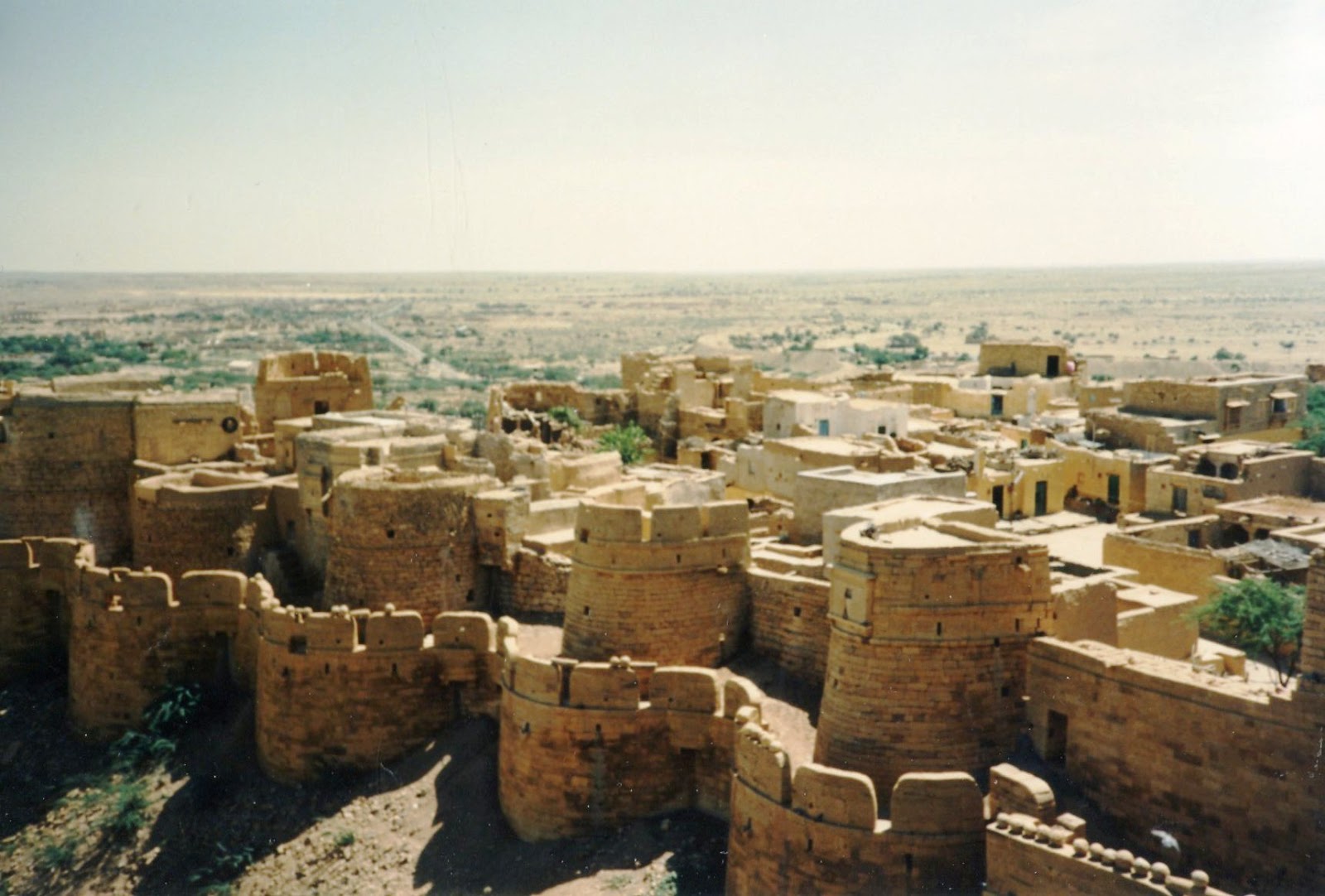
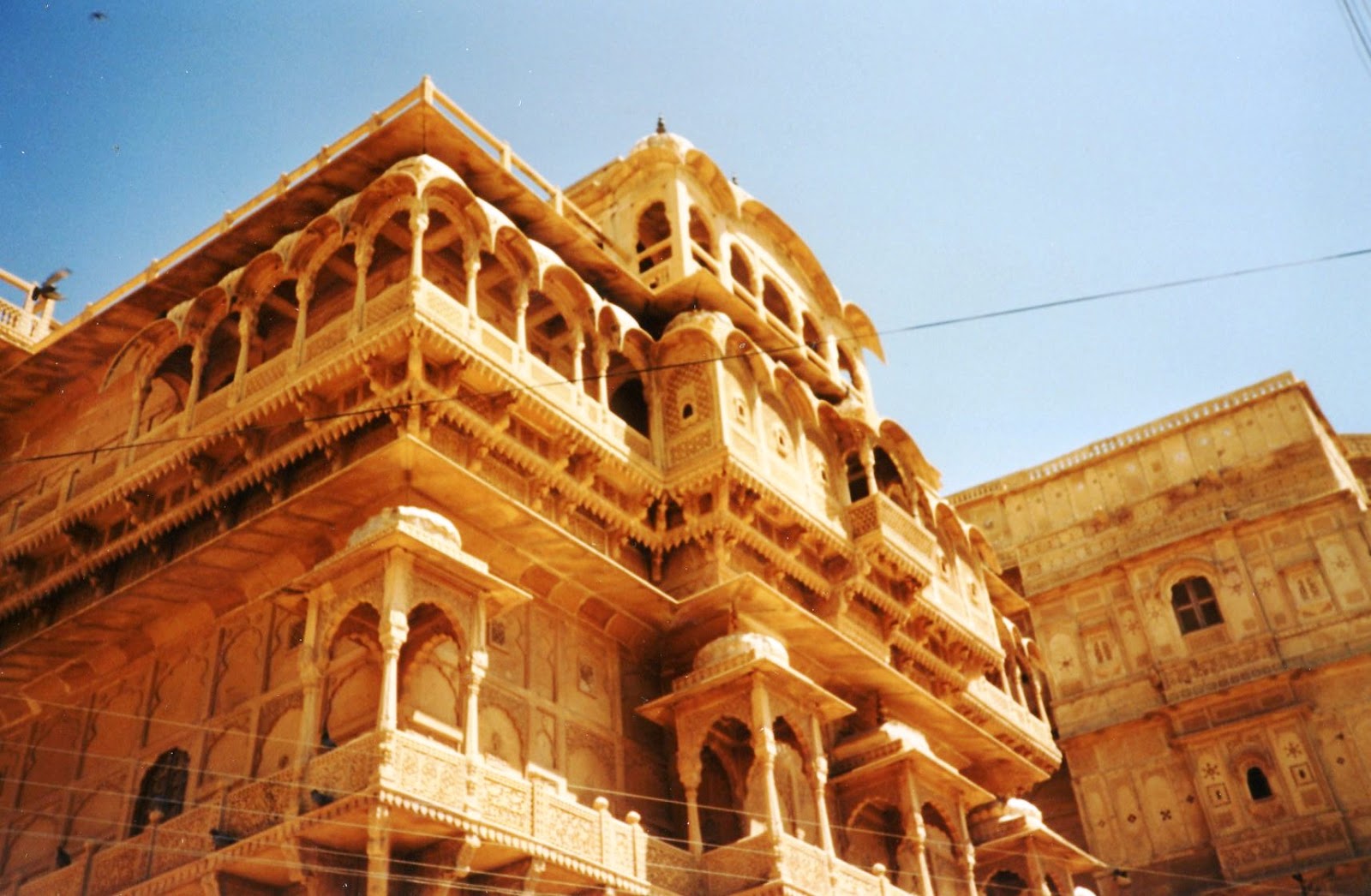
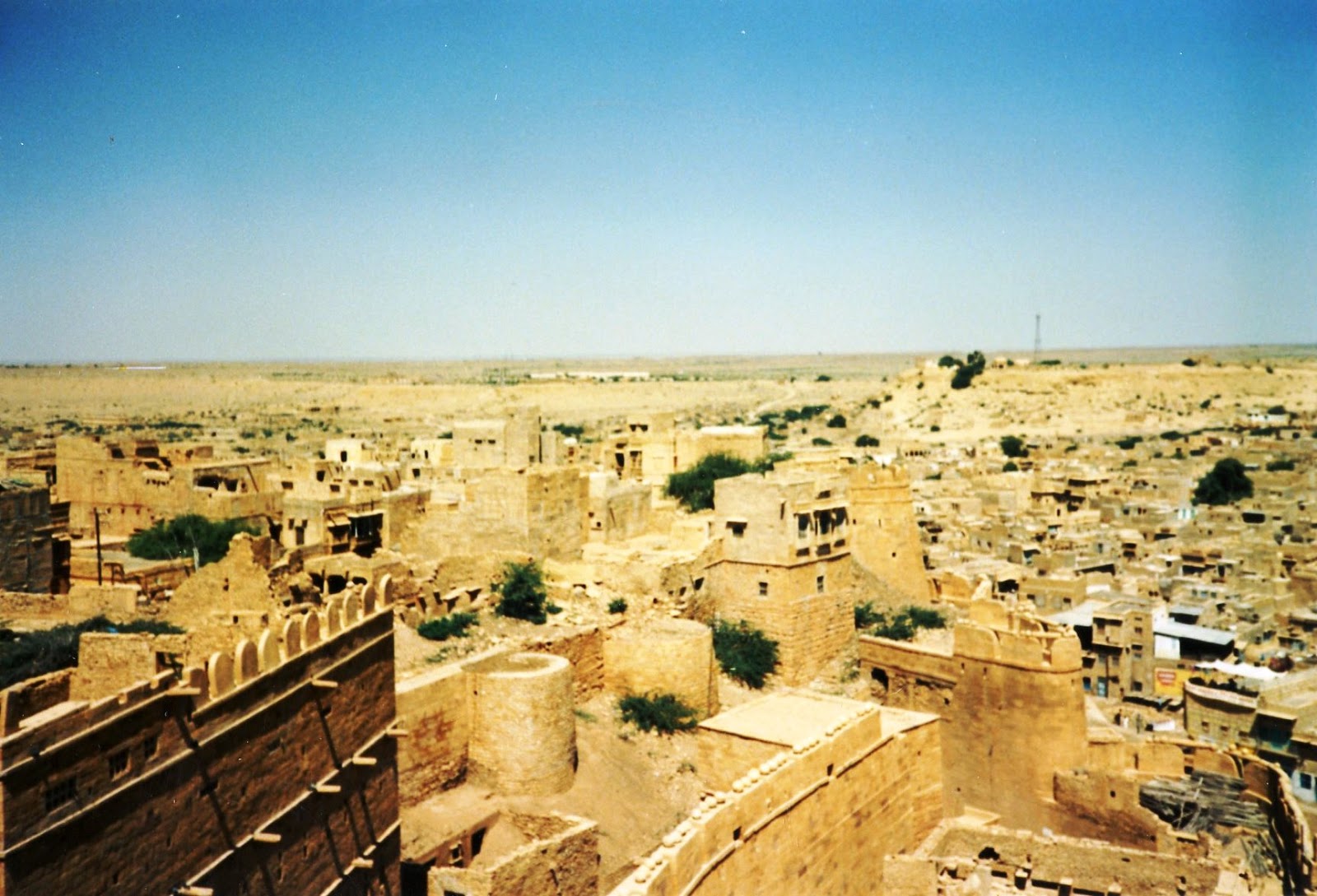
The old city of Jaisalmer is fascinating to wander around. All of the buildings are made from yellow sandstone, and it looks like a desert village. The winding roads are interesting and not so crowded compared with other cities. Also, the rarity of rickshaws make it much quieter than other Indian cities. We wandered up to the fort, which is an exotic yellow fortress (built in 1156) on a ridge overlooking the town–and full of more winding roads and yellow houses. We explored the outer ramparts of the fort, discovering several piles of shit (apparently the thing to do is shit while looking down on the city below!). We returned to the hotel where we had a nice dinner, but the manager wouldn’t stop pestering us. When we returned to our room, we found mosquitos and gnats that had gathered for a bug conference!
 |
| I loved the gorgeous architecture of Jaisalmer! |
 |
| Up on the fort, looking down over the city |
 |
| Fortress walls |
 |
| Couldn’t get enough of the architecture! |
 |
| Another view from the fort |
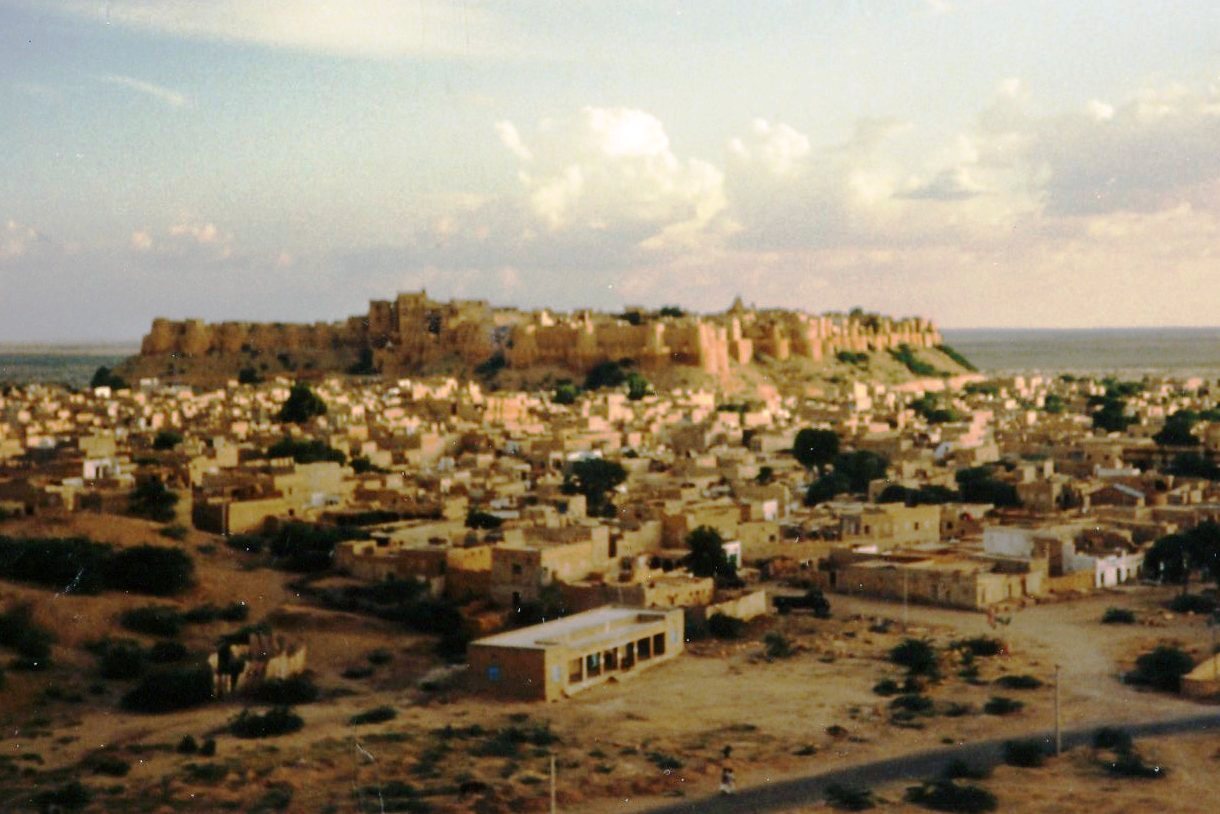
Then we went back into the fort, where we explored beautiful Jain temples with intricate stone carvings. We went into the wonderful seven-story palace with beautiful sweeping views of Jaisalmer and the surrounding desert. Later in the evening we climbed a ridge outside the city, hoping for a view of the sun setting on the fort.
 |
| View of the walled fort and city from afar |
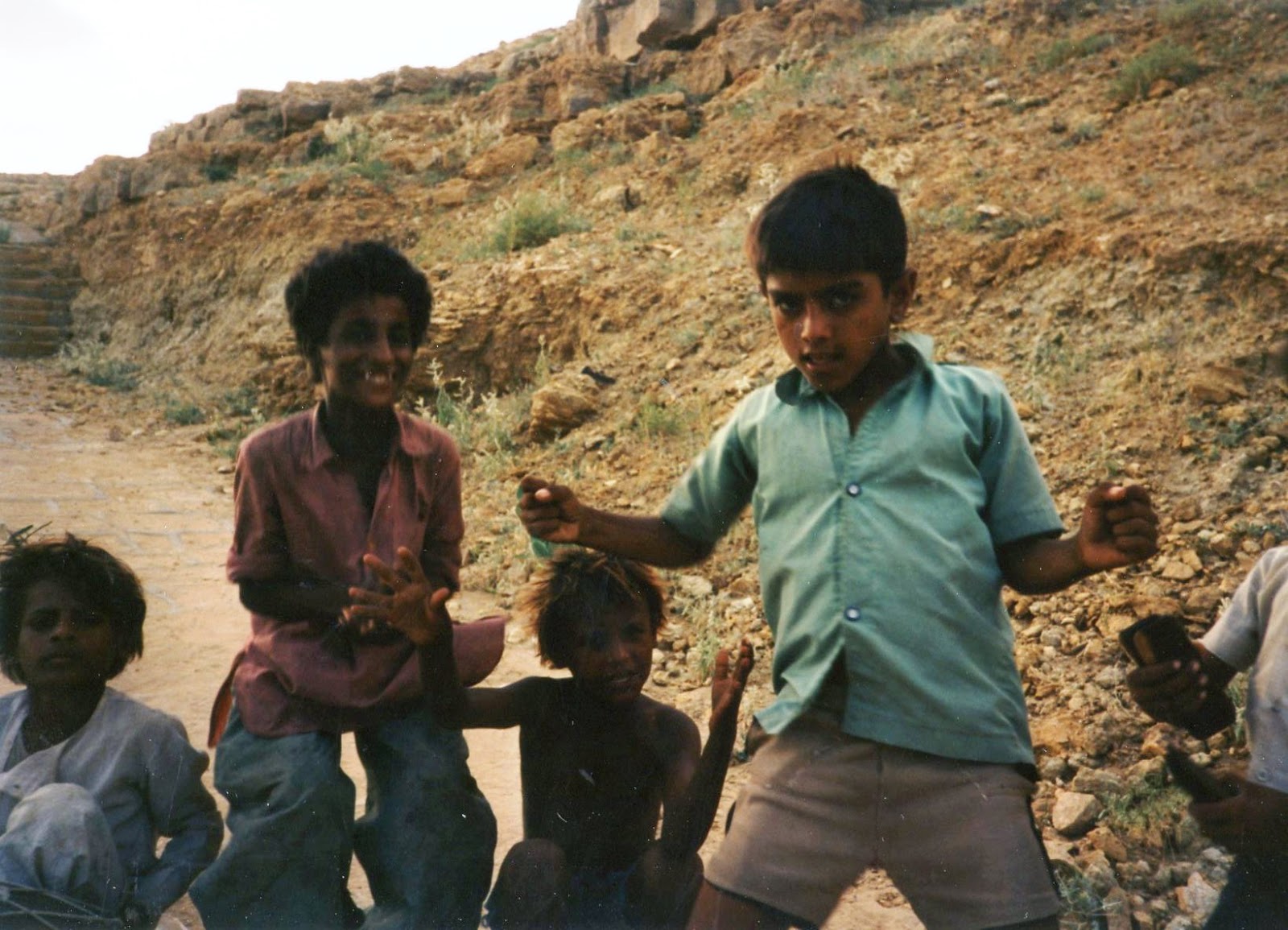
As we were climbing, a small band of boys followed us up the ridge. They turned out to be musicians, and before we knew it they surrounded us and burst into concert, banging drums and blocks of wood, and singing and dancing energetically. They were very friendly and claimed to be brothers. It was one of the most memorable encounters we had in India, far off the beaten path.
 |
This photo hangs in our living room,
a reminder of a wonderful chance moment in India |
We booked a camel safari in the hotel office–our options were a basic or a royal. The basic was “roughing it,” with food consisting of dal, chapati, and rice. The royal included an English speaking guide, good meals, drinks at extra cost, a tent, sheets, and pillows. We opted for the royal, thinking it would be nice to have a tent. The hotel staff was very pleased to hear this, of course. I’m going to save the camel safari for another day.
Visit here to read my A-I posts. Tomorrow, lots of K spots in Japan.

 Our second day in Jakarta was “trying,” as I wrote. We walked in the hot sun to the square and went up in the national monument for a view of the city…and then down to the basement to see a panoramic museum of the history of Indonesia. When we went off in search of the post office, we asked several people for directions, but they all gave us different ones. Finally we just gave up.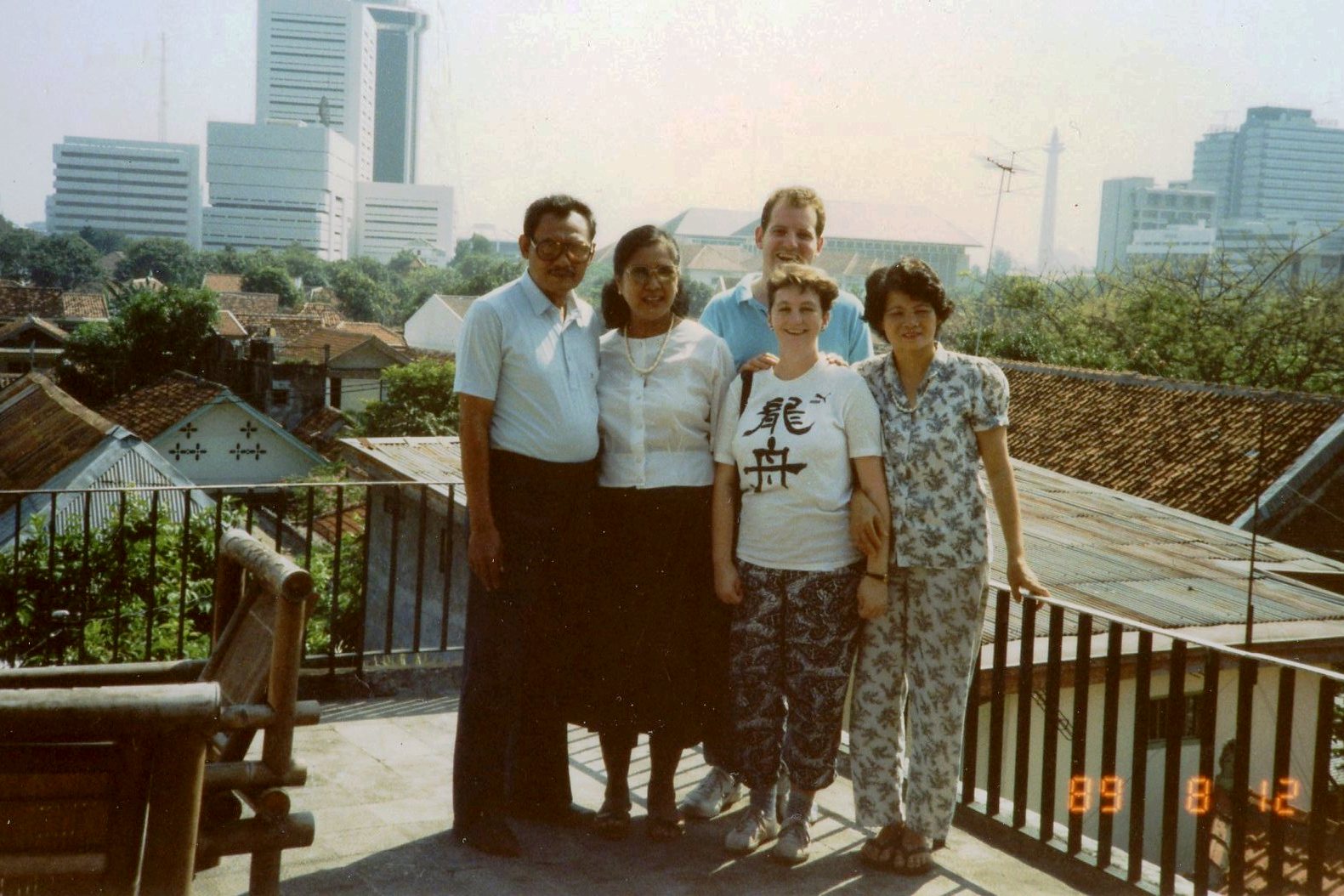












 Every Day Is a Miracle