For you NICU parents out there, you know what I’m talking about. If you are not an NICU parent, this is what that means:
A Grade 4 brain bleed is layperson speak for a “Grade IV intraventricular hemorrhage,” bleeding into the brain’s ventricular system. It’s very common in premature babies. Most brain bleeds occur in the first 72 hours after birth, and the use of oxygen (critical for extremely premature babies’ survival) increases the risk. Brain bleeds come in four levels. Grades 1 and 2 are the most common, and often result in no major complications. Grades 3 and 4 are the most serious and can result in long-term brain injury (blood clots forming, blocking the flow of cerebrospinal fluid and increasing fluid in the brain) or death.
I vividly remember the nurses and doctors repeatedly telling us how lucky we were that our own 24-weeker, Chris, did not have a brain bleed. They considered it quite the miracle, since he was born at the edge of viability and had a much higher chance of having a brain bleed than older preemies.
Parents of preemies who have Grade 4 brain bleeds are not given much hope for their beloved babies’ survival or “positive long-term income” (doctor speak). So when I read this story about a young woman who had a Grade 4 brain bleed and lived to tell the tale, it brought tears to my eyes…and I knew I had to pass on the story from the It’s a Preemie Thing blog.
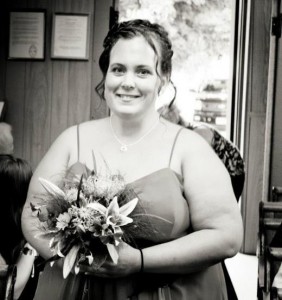
Shannon Harper, now 27, was born 3 months early weighing only 2 lb., 12 oz. and measuring 12 inches long. Because of her brain bleed, she has endured three shunts (to relieve pressure on her brain), 13 shunt revisions, mild cerebral palsy, heel cord surgery, years of physical therapy, and two “exploratory” head surgeries (a total of 18 surgeries).
She is now not only an NICU grad but also a college grad and works as an educational assistant, helping children who struggled with some of the same challenges she did.
I knew parents who faced the agonizing life-or-death decisions involved with Grade 4 brain bleeds. We faced that same decision ourselves when Chris (1 lb, 6 oz., and comparatively long compared to Shannon at 11 inches!) had cerebral edema and low flow to the brain…before he completely turned things around the next day. Parents just have to hope, when making those decisions, that their precious ones give them some kind of a sign that they are ready to go.
One of our favorite NICU docs used to say “Never trust a preemie.” That has proven to be true. Some of the preemies who have the most horrific NICU stays imaginable (including Chris) have relatively unscathed childhoods and grow up to be healthy and independent like full-term kids…while others who have comparatively easy NICU courses face more challenges and developmental issues. I know other parents of preemie kids can relate that just when you think you are in the clear, something new pops up.
On those days when Chris couldn’t keep a thing down and vomited everything he ate (bad reflux)…and I was worried he’d be labeled with the dreaded “failure to thrive,” or when he didn’t walk until 15 months adjusted (19 months actual age), or he didn’t talk until he was three…I clung to every shred of hope I could find.
I love stories like these…that can offer hope to parents that in spite of the odds…and the depressing statistics…things can turn out okay in the end. You can just tell, looking at Shannon’s smile, that she loves life and knows that she is a success story. Isn’t that what we hope for our children?


 Every Day Is a Miracle