On my A to Z Blogging Challenge, I’m focusing on overseas destinations I’ve visited.
Some days I will have several destinations, and others only one. I will have to fill in for two letters (X and Z). Ready to join me for a little travel? Here we go!
A is for Amanohashidate, Ayutthaya, and Agra
Amanohashidate (天橋立), Japan (November 1986)
 |
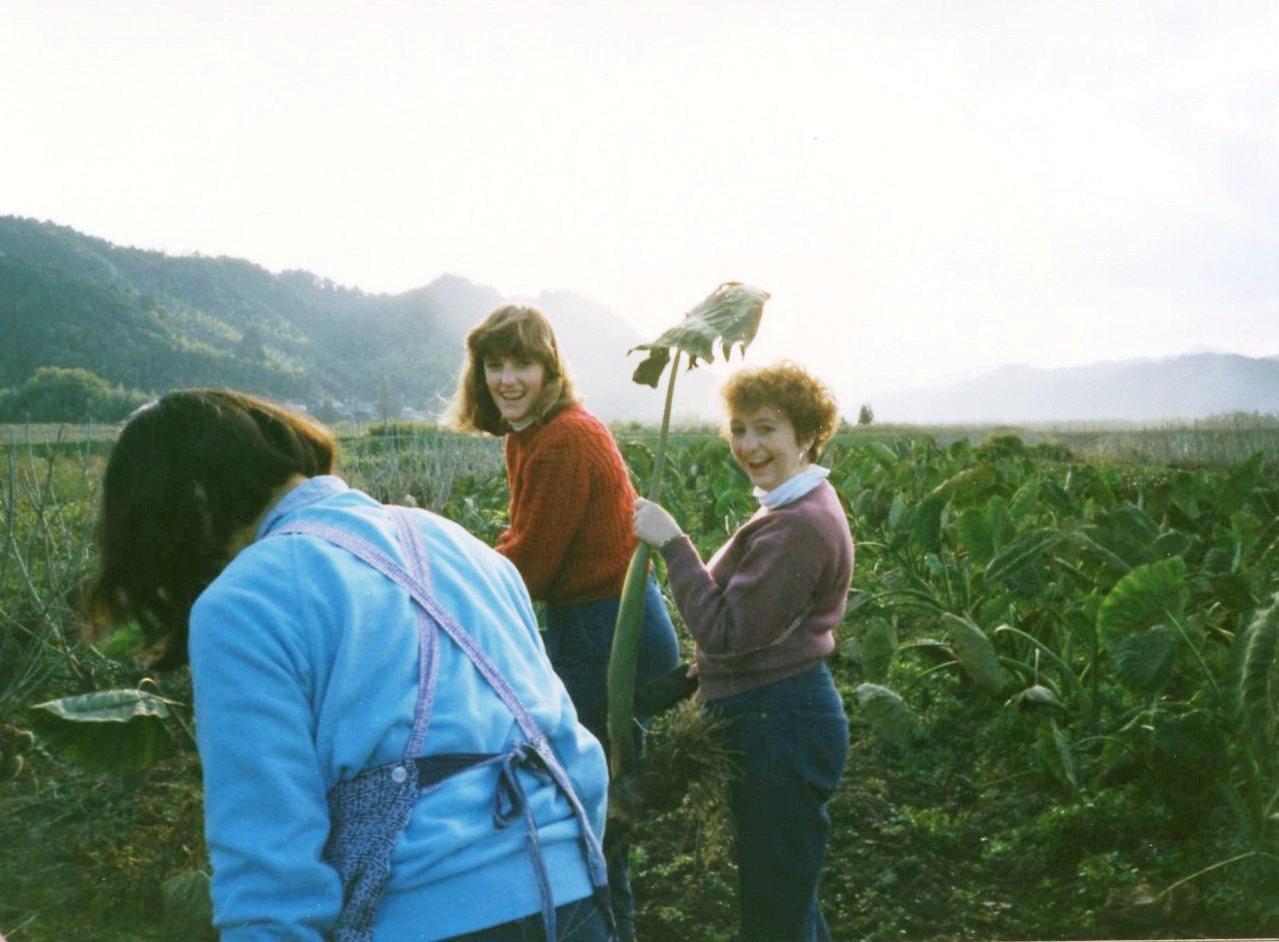
| Picking mikan (oranges) |
 |
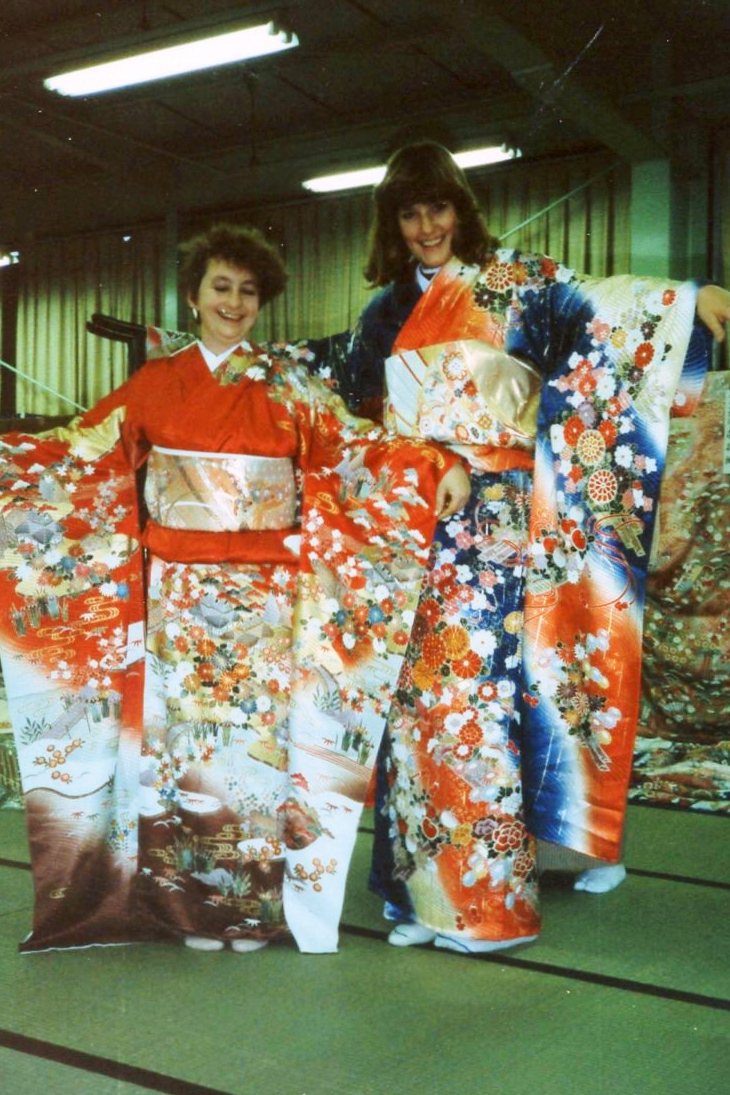
| In kimono |
 |
| Going up the mountain |
 |
| Picking yama imo |
During my first year in Japan, our bosses hired us out to teach salarymen (the Japanese term for businessmen) in Osaka. My friend Debbie and I would take the train into the city one evening a week to teach them English conversation. One of the men called himself Carlos. He invited us to accompany him to the countryside to visit his family, and that weekend was one of the most authentic, memorable Japanese experiences in my time there. We stayed on Carlos’ family’s farm in the country, harvesting and eating kaki (persimmons), mikan (oranges), and yamo imo (Japanese mountain potatoes); touring the countryside; learning how to make gyoza (potstickers) and somen (noodles); eating our meals around a kotatsu (table) with a charcoal brazier underneath; visiting a paper-making factory; and eating Aiu fish with head intact. We also tried on kimono and had some fascinating and at-times-tense discussions with our guests about love, liberty, and Hiroshima. At one point, Carlos declared “I am glad I was born a male in Japan,” which forced me to bite my tongue! Fortunately his spunky sister Yoko, who I adored, responded by saying “Women are smarter; they are stronger!”
 |
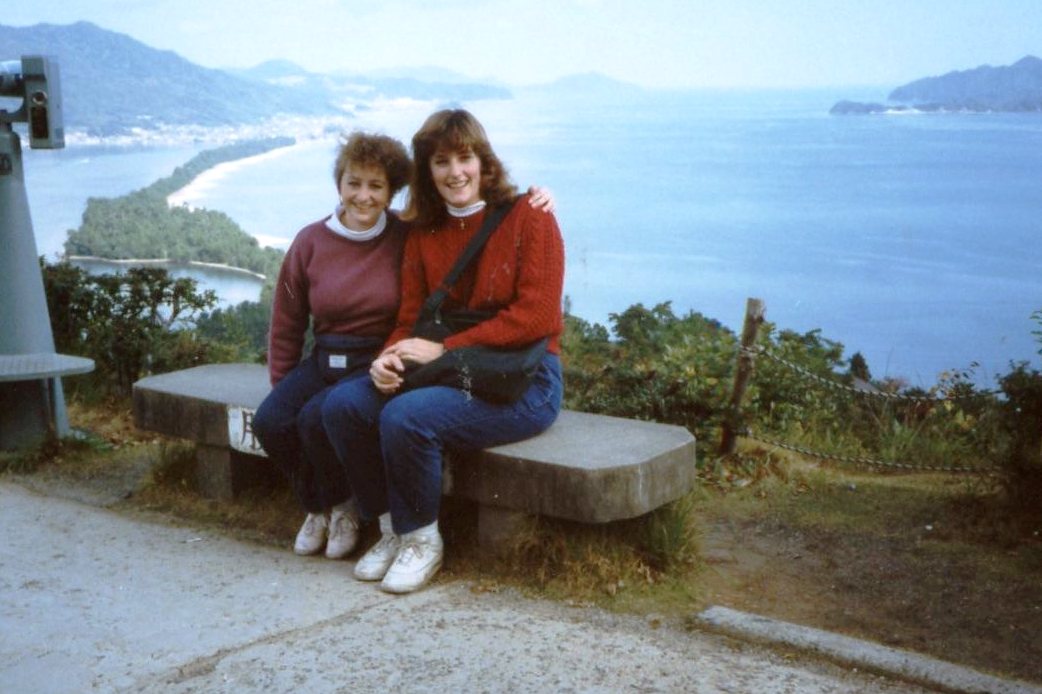
| Aerial view of Amanohashidate |
 |
| Is it floating? |
They took us to see Amanohashidate, which is one of Japan’s three most famous scenic views. We rode ski lifts up to the top of the mountain, where we had a great view of the “Floating Bridge to Heaven.” By tradition, we bent over and stuck our head under our knees, which is supposed to make the bridge appear as if it is floating…and also bring good luck. The pine tree-covered sand bar is 3.6 kilometers long and spans across Miyazu Bay on the Tango Peninsula in the northern Kyoto Prefecture.
Learn more about Amanohashidate here.
 |
| Obaa-san, our host at the farm |
Ayutthaya, Thailand (March 1987)
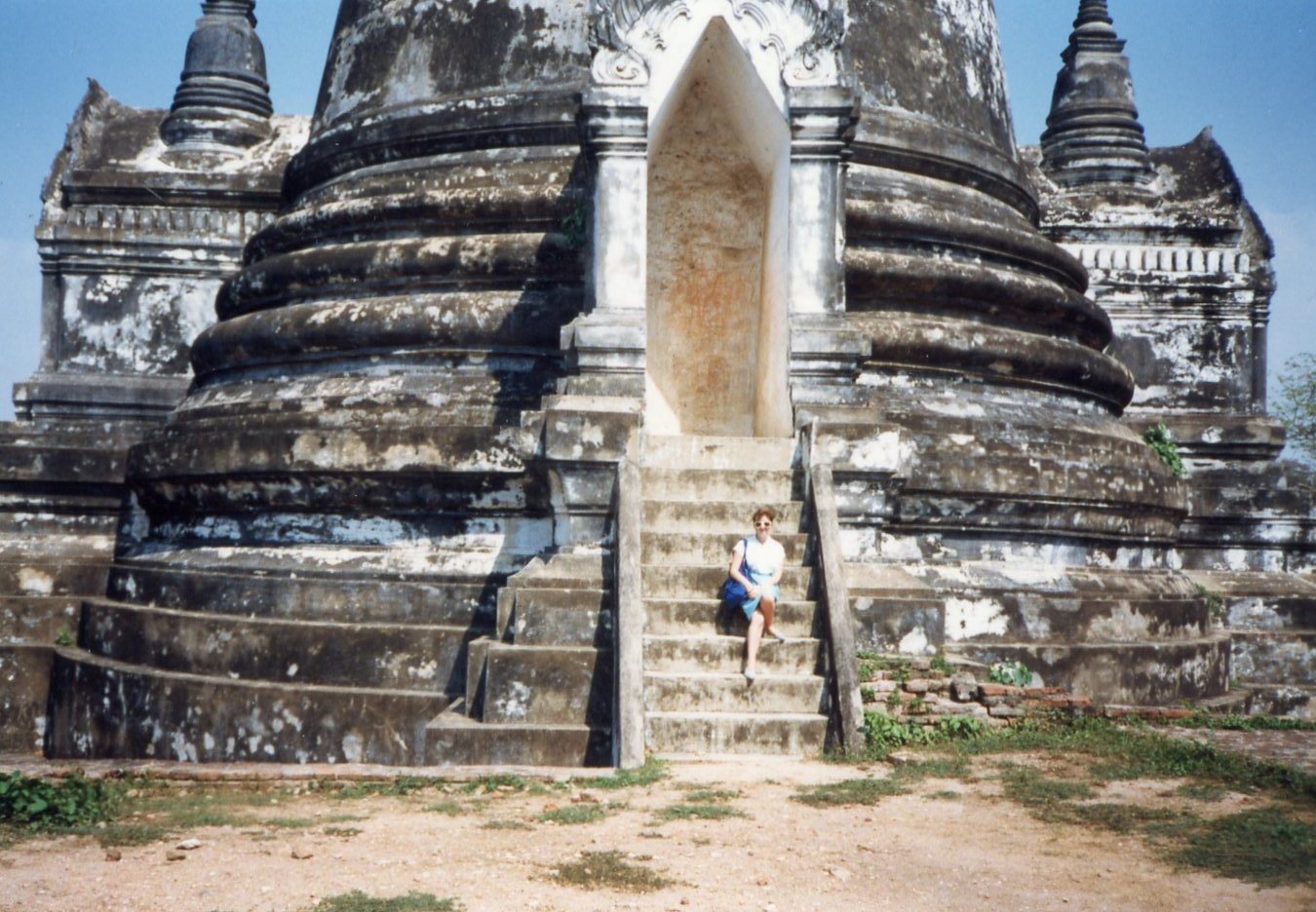
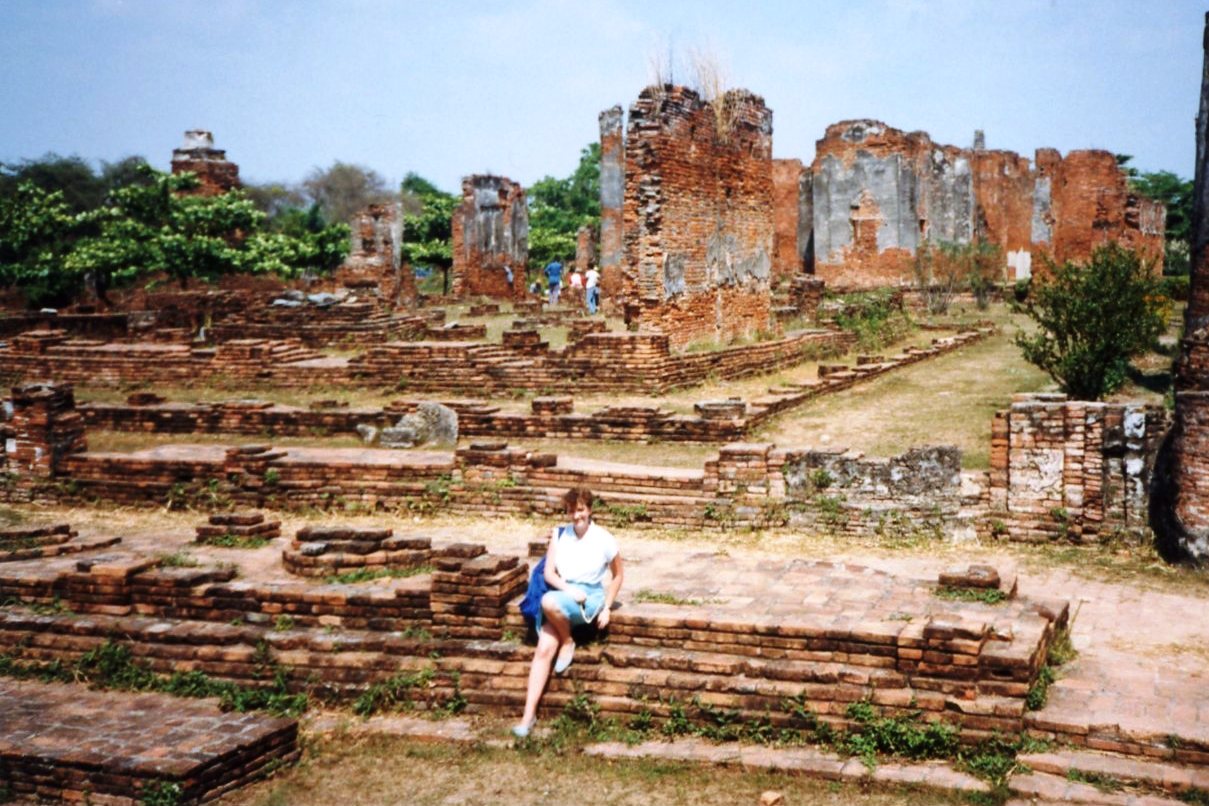
When Debbie and I visited her friend Noi from PLU, in Thailand, Noi and her parents were incredibly gracious hosts and extremely protective. One day Noi’s parents and their business friend took us on a trip to the ruins of the city of Ayuttaya, which was founded by King Ramathibodi I in 1350 and was the capital of the country until the Burmese army destroyed it in 1767. During its existence, 35 kings ruled the kingdom. Now it’s a historical park.
According to my journal, I actually found the experience in Ayutthaya to be sad–to see the destruction of what was once a thriving center of Thailand.
Agra, India (September 1989)
 |
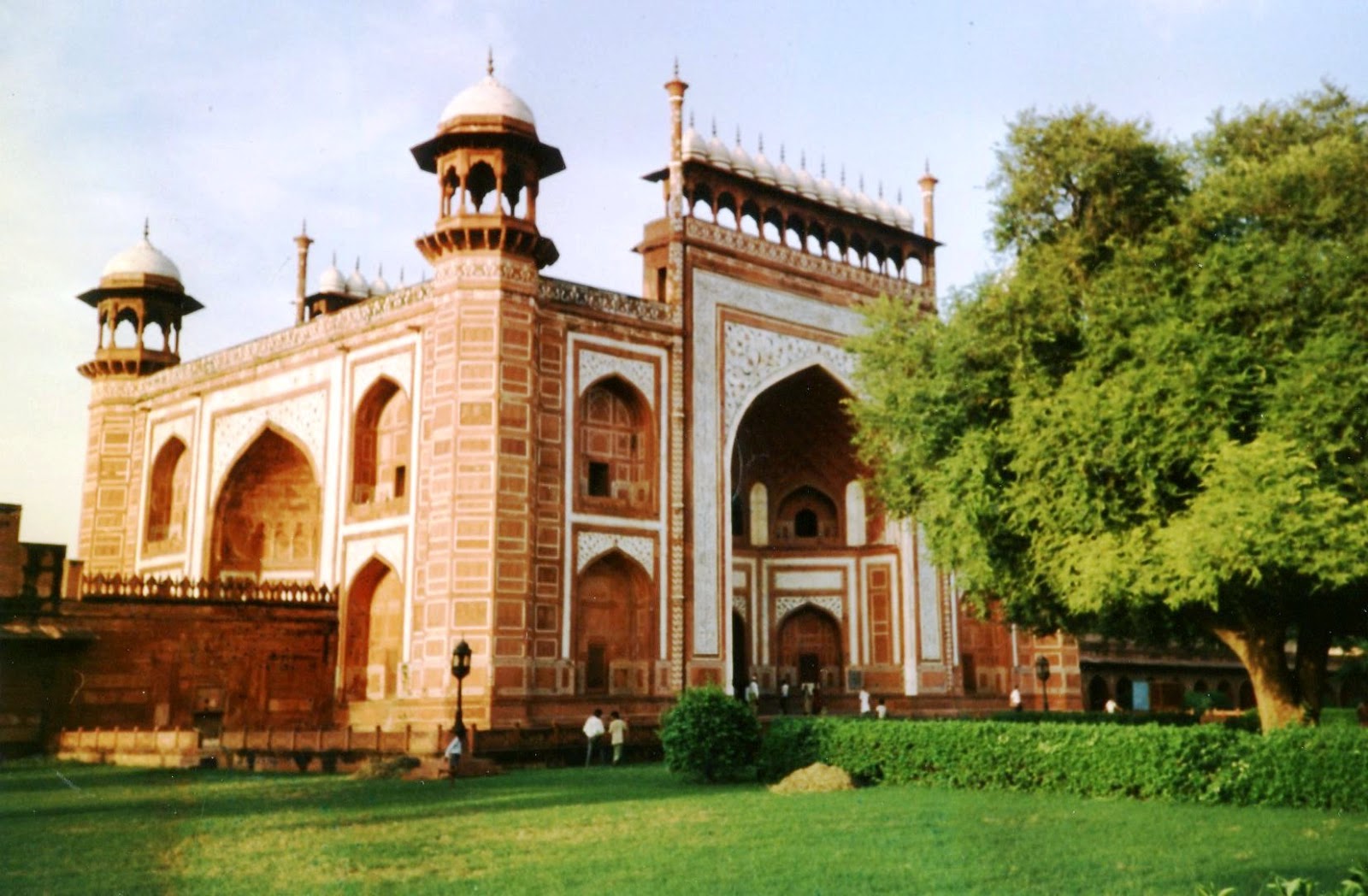
| Gate to the Taj Mahal |
After leaving Japan in July 1989, Mike and I took off for a two-month trip through Asia. India was our final destination country, and after five days in Delhi, we went to Agra (a much less stressful city). Agra is a 2 hour, 45-minute train journey from Delhi. Agra is most famous, of course, for the amazing Taj Mahal, which the Mughal emperor Shah Jahan built in memory of his third wife, Mumtaz Mahal, after she died during the birth of their 14th child.

Most of the Taj Mahal took 12 years to complete, with an additional 10 years to complete the rest of the complex (around 1643). Materials and 20,000 workers were brought in from all over India and Asia, and 1,000 elephants transported the materials. Soon after the Taj Mahal was completed, Shah Jahan was deposed by his son Aurangzeb and put under house arrest. When he died, he was buried next to his wife in the mausoleum. Read more about the Taj Mahal here, and one of my favorite books, Beneath a Marble Sky by John Shors, retells the story of Mumtaz, Shah Jahan, and their daughter, the Princess Jahanara (in fiction).
 |
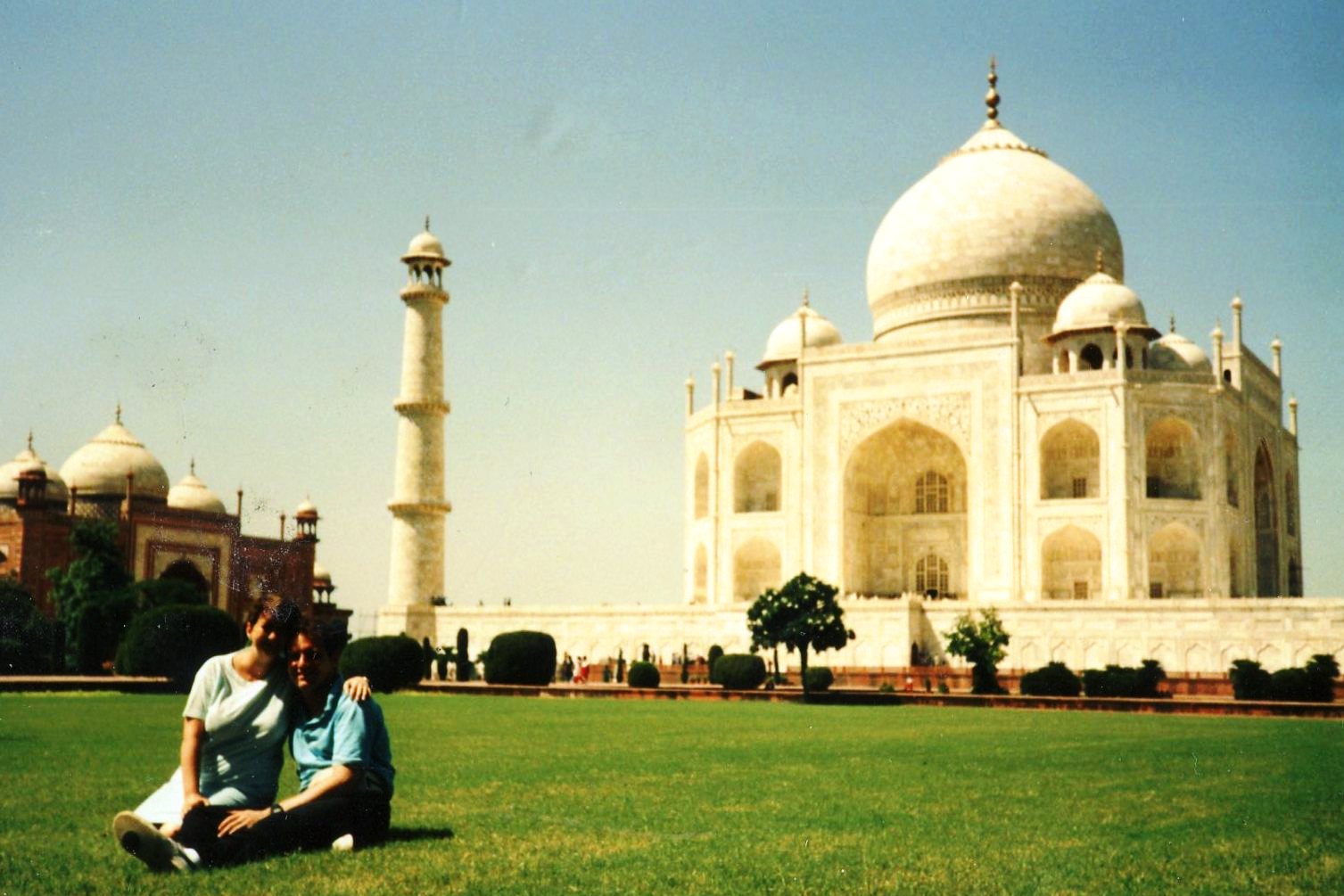
With my love in front of the
world’s greatest monument to abiding love |
We had run into our Scottish friend Jill in the Delhi train station (Jill had left Japan several months before us and had been traveling through Asia for months)…just one of the many times we have run into people we know in completely random places while we travel! Jill traveled to Agra with us–she was happy for the company since she had her money belt (passport included) stolen in Delhi and was feeling lonely. While we stayed in Agra, we found a wonderful vegetarian restaurant run by the followers of Baghwan Shree Rajneesh (who became famous in Oregon!), called “Zorba the Buddha.” It was not easy to find good, inexpensive food in India, but this was a highlight…so much that we ate there a couple of times while we were in Agra. Apparently it is still in operation, 24 years later! While in Agra, we also visited Fatepur Sikri, a deserted old city built by the emperor Akbar between 1570 and 1586. Agra was a great second stop on our Indian adventure, and one of only two spots we visited outside of Rajasthan, where we spent most of our time.
Stay tuned for tomorrow’s B adventures!


.jpg)






 Every Day Is a Miracle