As for the stigma I was still trying to surpass, I planned to keep my hair longer around my ears so no one could see the hearing aid…and I planned to use it only when I needed the extra help.
Most insurance does not cover hearing aids. I asked my ear surgeon for a rough cost estimate so I could start saving up. When he referred me to the audiologist on his team, she told me about “voc rehab,” short for “vocational rehabilitation.” The State of Oregon has a program that funds hearing aids for working people. It’s all about keeping people employed. All I had to do was fill out some paperwork with the audiologist and have an interview with a case manager and wait several weeks.
At the voc rehab office, I realized I was not their typical client–much of what they do is job training and equipping people for the workplace. The state paid for my $3,500 top-of-the line hearing aid. Thank you, Oregon! Most people are not aware of voc rehab assistance for hearing aids. It was a godsend for me, because it meant I would no longer put off treating my hearing loss.
 |
| The summer I got my hearing aid (you can see it, just barely, if you zoom into my ear) |
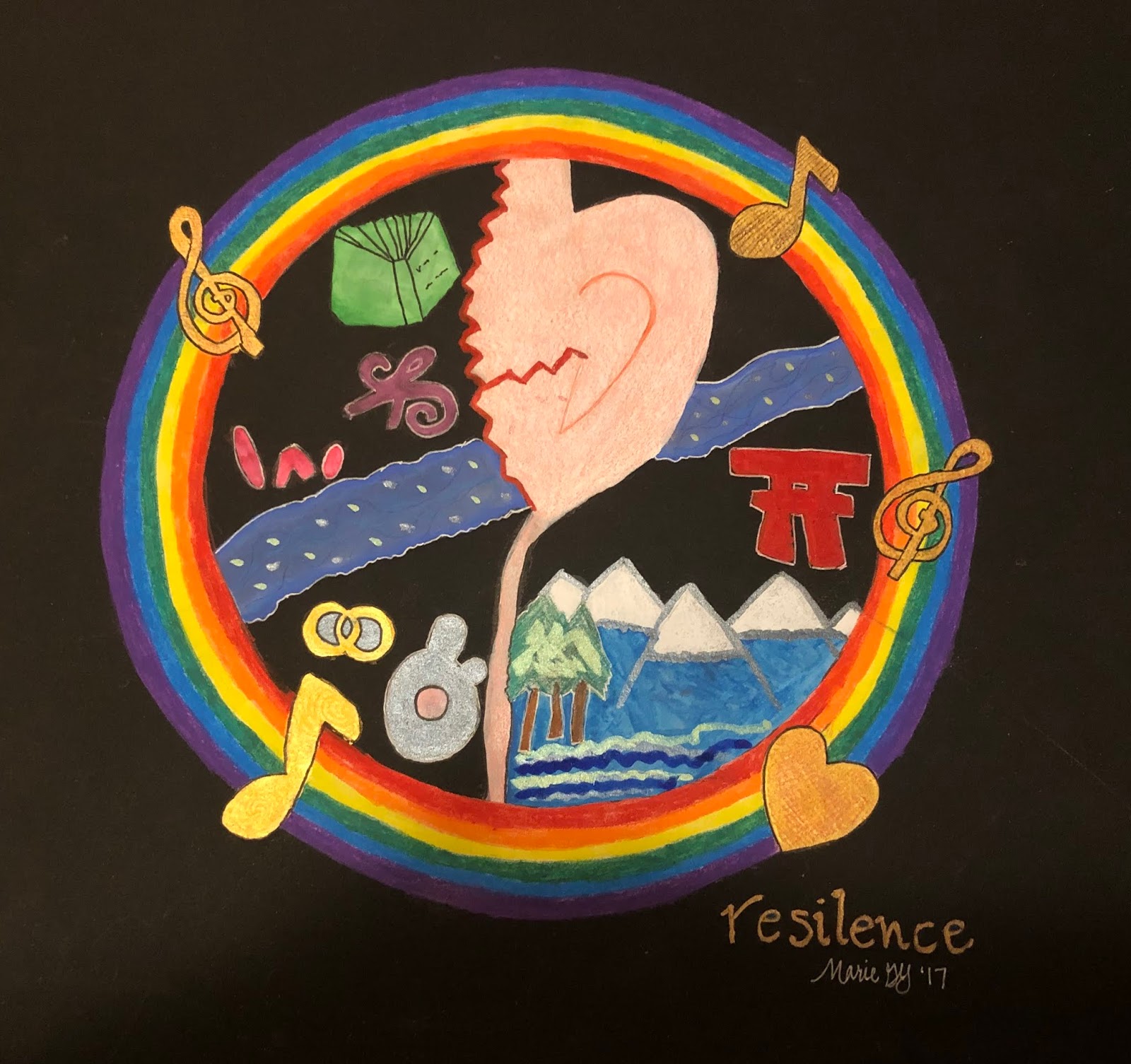
A few weeks after I started wearing a hearing aid, I was fortunate to take an art class on the mandala…coincidentally taught by a highly talented artist who has a much more severe hearing loss than I do. Mandalas, when done well, are a journey of the self. My mandala illustrates the injury to my ear, along with symbols of the things that are important to me, the value I get from using all of my senses effectively, and the rainbow around my life…summed up in the word “resilience,” for I will not let myself be hobbled by a hearing loss. Through my cholesteatoma trials, I realized that resilience is the theme of my life and it is my motto.
I constantly hear from friends whose spouses/parents/significant others need hearing aids but don’t want to get them…or sometimes they have them and don’t want to wear them. I am happy to be a champion for hearing aids!
hearing aids really do improve quality of life.
If you answer “Yes” to any of the following statements, you should get your hearing tested and consider a hearing aid.
-
I require frequent repetition in order to understand speech.
-
I have difficulty following conversations with more than two people.
-
I think other people’s voices sound muffled.
-
I have difficulty hearing in noisy situations.
-
I have trouble hearing children and women.
-
I turn the TV or radio up louder than others.
-
I answer or respond inappropriately in conversations.
-
I experience ringing in my ears.
-
I read lips or depend on other people’s facial expressions during conversations.
-
Improved cognitive skills: If you leave your hearing loss untreated, it can lead to faster cognitive decline. Hearing aids can help improve your brain function and working memory. According to the AARP,
“A research team from the University of Maryland Department of Hearing and Speech Sciences followed 35 older adults with mild-to-moderate hearing loss who had never worn hearing aids. One group was given hearing aids to wear over a period of six months; the other group went without. The researchers used a variety of tests to assess participants’ hearing, as well as their working memory, attention and processing speed. After six months, the same tests were repeated. What they learned: Those who wore hearing aids showed improved memory, as well as an improvement in the way the brain processed sound.”
When you wear hearing aids, the parts of your brain that are trying to ascertain what’s going on and stay up with conversations can now be used in more powerful ways.
-
Reduced risk of dementia: The risk of developing dementia in people with a mild hearing loss is two times higher than those with normal hearing, and the risk increases with the hearing loss. Those with untreated severe hearing loss have a four times higher risk of developing dementia than people with normal hearing.* Researchers believe that people with untreated hearing loss have a higher dementia risk because of (1) the constant strain of trying to decipher sounds overwhelms the brain, (2) a person can become socially isolated and have less mental stimulation, and (3) hearing loss results in tissue loss in the hearing portion of the brain, which also controls memory, learning, and thinking. Fortunately, studies show that if you treat the hearing loss, your dementia risk will be similar to someone without a hearing loss. This proves that our brain needs to hear sounds and stay engaged.
-
Improved health and bank account: Further studies show that people with severe hearing losses have twice the unemployment rate as people with normal hearing. Older adults with hearing aids are less likely to go to the hospital, and if they do go, they have shorter stays! Furthermore, older adults with untreated hearing loss have 46 percent higher health costs than those with normal hearing…probably because of the following factors…
-
Reduced risk of falls: Your hearing is closely linked to your vestibular system. Seniors with hearing loss are at a greatly increased risk of falling. Even with a mild hearing loss, the risk of falls is three times higher, and it increases further by 1.4 times for each additional 10 percent drop in hearing.
-
Improved mood and decreased depression: The AARP reports that “a survey by the National Council on Aging of 2,300 hearing-impaired adults, age 50 and older, found that those with untreated hearing loss are more likely to battle depression and anxiety than those who use hearing aids. Among those with severe hearing loss, 30 percent of nonusers of hearing aids fessed up to sad feelings, compared to 22 percent of hearing aid users.” If you can’t hear what’s going on, it can isolate you and cause you to feel left out…contributing to depression. It also can make you feel older and more feeble…not a good feeling!
-
Better relationships: Anyone who suffers a hearing loss knows how hard it is to communicate when you can’t hear well. A British study found that 44 percent of people reported relationship problems because they couldn’t hear properly. It also can have detrimental effects on your marriage or romantic relationship. It can get exhausting for your partner to have to keep repeating and explaining things. Fortunately, hearing aids can help. A Hear the World Foundation survey of more than 4,000 people found that hearing aids improved relationships in 70 percent of respondents.
-
Better sense of location: Hearing aids will help you hear where sounds are coming from, creating a safer environment for you. Not knowing where sounds are coming from can be dangerous.
*Statistics from the Association of Hearing Instrument Practitioners of Ontario
Wearing a hearing aid has improved my quality of life and increased my self-confidence in groups of people. I don’t have to ask people to repeat themselves and when I attend a play or other sort of performance–or attend a large business meeting–I can hear everything so I can participate more. I can also turn up my hearing aid if someone is talking especially quietly.
And about that stigma?
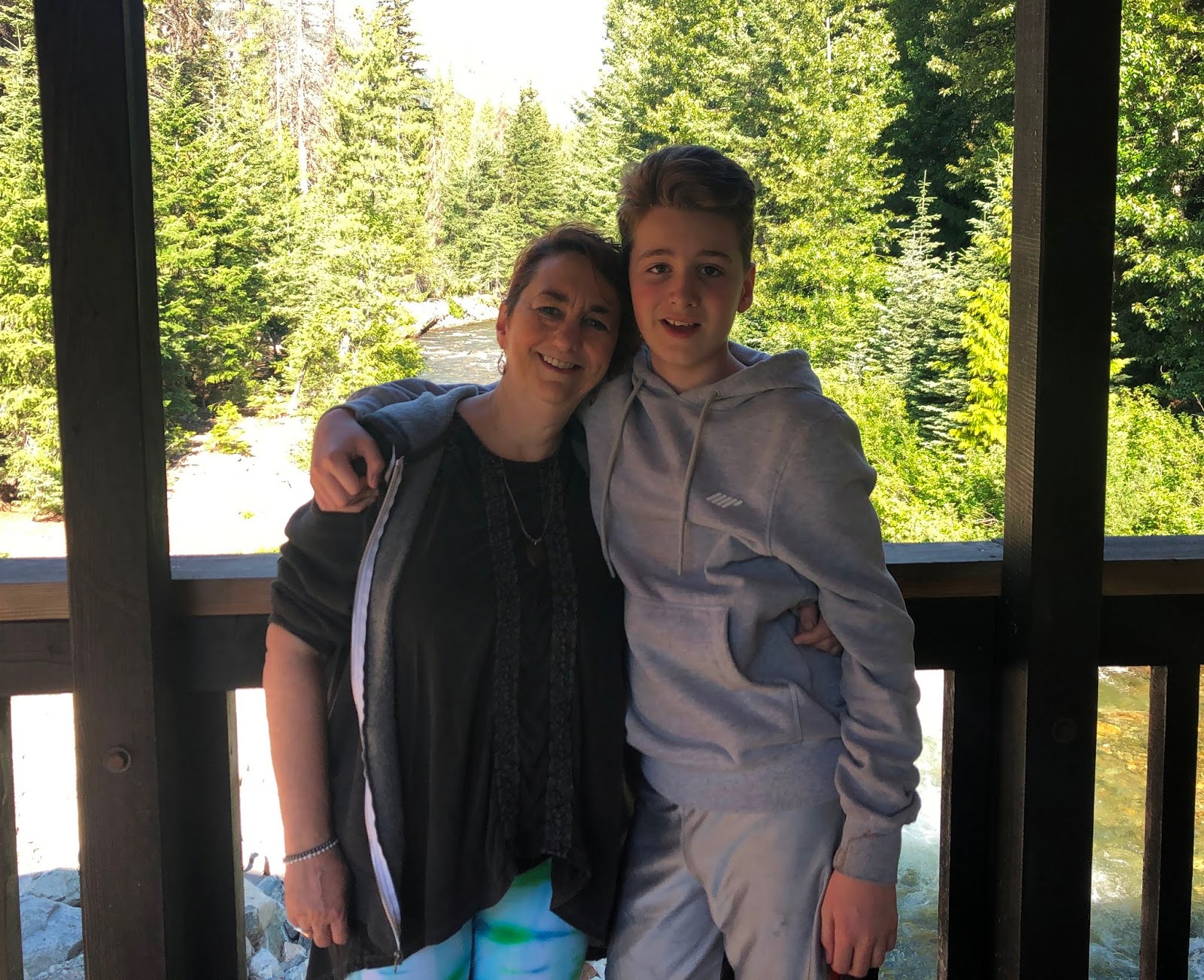 |
| Two years later, with my youngest son again Still wearing my hair short! |
Most people don’t even know I wear a hearing aid…although I got past my own stigma pretty quickly and continue to wear my hair short. If people look hard at my ear, they can see it. As I’ve been applying for jobs, I have to mark if I have a disability or not. That’s a tough one–because yes, I do have a disability, but it does not affect my inability to do my job well, thanks to my hearing aid. I mark “no” in that box.
What I realize now is that my hearing aid helps me stay youthful and full of vitality. Nothing ages a person more than having to ask people to repeat themselves and not being able to contribute to every conversation. My dad’s much more extensive hearing loss can be isolating for him, especially when he is not wearing his hearing aids. My hearing aid helps me stay mentally sharp and fully engaged in my social life and career.
But it’s better late than never–Prince Philip started wearing hearing aids at age 95!
Just a few final pieces of advice:
- If you do not have hearing loss, protect your hearing before it’s too late. Wear ear plugs or another form of ear protection when mowing the lawn, using power machinery, or attending rock concerts. In my case, that wouldn’t have helped, but in many cases hearing loss is due to damage to your ears though loud noises.
- Find a qualified, certified audiologist to fit you with hearing aids and if possible, get the highest quality you can afford. Hearing aids can take some adjustment to get right–after I got mine I went back a few weeks later to get them readjusted–and it’s worth it to invest the time and money to do it correctly.
Do you wear a hearing aid? What has your experience been? Do you have any advice to impart to others? Chime in below in the comments! Happy hearing! #NaBloPoMo2019


